




INVASIONS Deploys Innovative Collectors to Monitor Non-Indigenous Species Across the Greek Ionian Sea
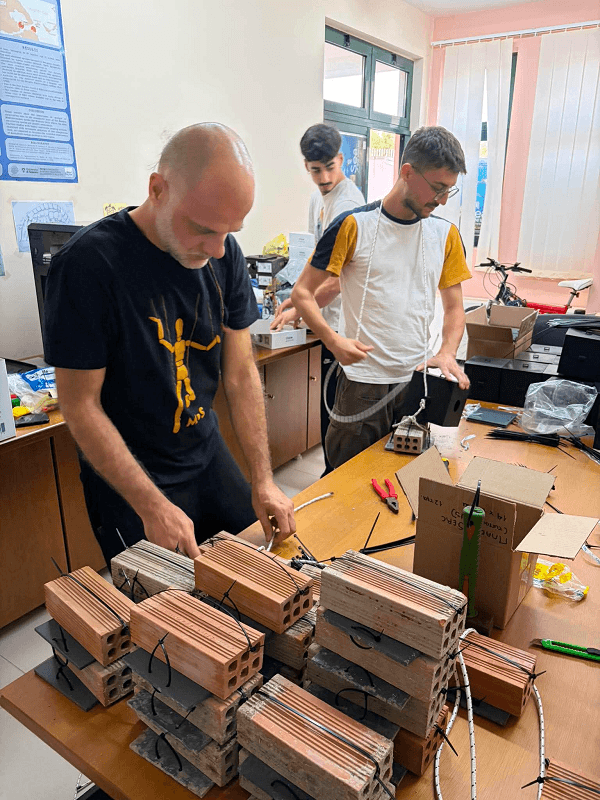
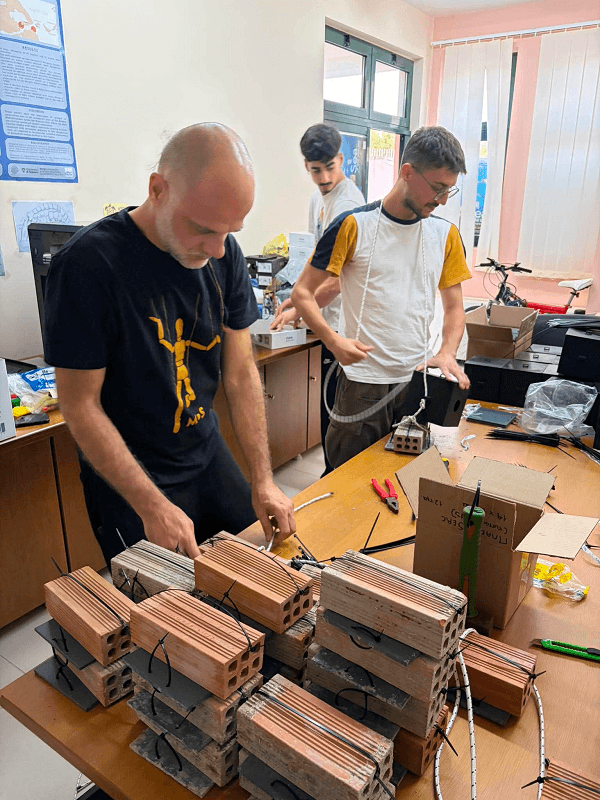
In May 2026, the INVASIONS research team completed the construction and deployment of NIS collector units designed to monitor both sessile and motile marine organisms in ports and marinas.
A total of 24 NIS collectors were deployed, with six replicate units installed at each of four selected locations: Zakynthos, Patra, Lefkada and Itea. The four sites were selected to represent the principal biogeographic subregions of the Greek Ionian Sea: the Southern Ionian, Central Ionian, Northern Ionian and the Corinthian Gulf.
Each collector was suspended at a depth of approximately 1–2 meters and combined three complementary sampling components arranged vertically:
- A 3D-printed PLA cubedesigned to replicate shaded and cryptic habitats and provide suitable microhabitats for organisms associated with dark environments.
- A folded PVC meshproviding a three-dimensional and sheltered environment for motile organisms, including protection from predators.
- A PVC fouling panelprimarily targeting sessile organisms that colonise artificial submerged surfaces.
This integrated design combines established monitoring protocols with the project’s custom 3D-printed component, enabling simultaneous sampling of different ecological groups through a standardized, practical field unit.
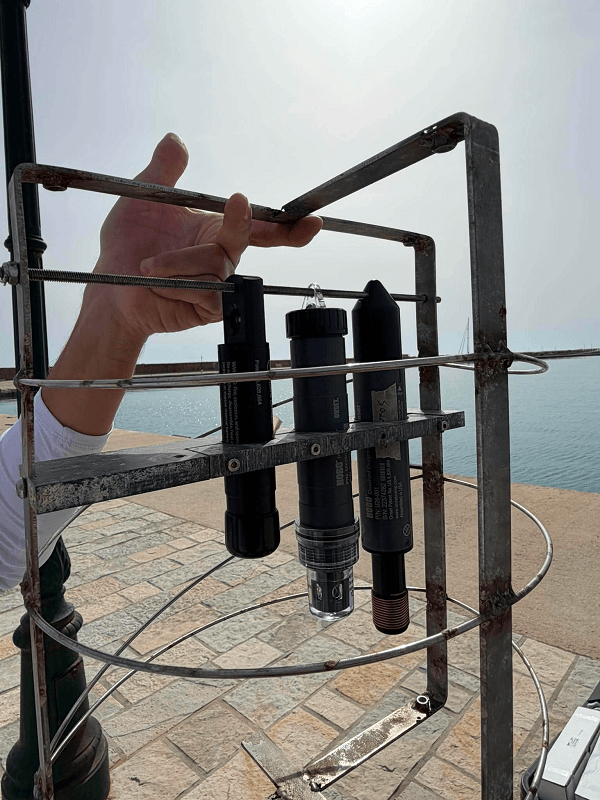
At each location, the collectors were deployed together with instruments that recorded key abiotic parameters, specifically water temperature, salinity, pH, and dissolved oxygen. These environmental data will support the interpretation of colonisation patterns and differences among the four study areas.
The collectors will remain submerged for approximately six months, covering the main tourist season and the period of increased recreational and commercial vessel movements. Their retrieval is planned for November 2026.
Following retrieval, the developed communities will be examined through morphological identification, photographic analysis and bulk DNA metabarcoding. The comparison of these complementary approaches will help evaluate the performance of the collector components and support the development of a standardized monitoring framework for the early detection of marine non-indigenous species.
The deployment activities were conducted by PhD candidate Ioannis Rallis and HCMR Scientific Research Associate Giorgos Chatzigeorgiou.
This activity represents a major step in the implementation of the INVASIONS monitoring strategy and will provide comparable biological and environmental information across four key areas of the Greek Ionian Sea.